Since the original Social Principles in 1972, the first section to follow the Preamble has always been “The Natural World.” If the church is to consider social principles, it only makes sense to begin with creation—the primary resource humans must protect and care for in order to survive.
The Revised Social Principles maintain this primary responsibility by keeping creation as the first section, renamed as “Community of All Creation.” The section addresses several topics related to creation, all built upon a foundation of three basic theological principles:
- The natural world, and all that is in it, is created by God and thus valued by God.
- Creation consists of complex ecosystems of which humans are a part, and all beings within these ecosystems are valued by God.
- Our role as humans is one of stewardship and care, not domination or anthropocentrism.
1. The natural world, and all that is in it, is created by God and thus valued by God.
“We affirm that all creation belongs to God and is a manifestation of God’s goodness and providential care.”
“We recognize the inherent worth of God’s creation, celebrate earth’s abundance and diversity, and, along with the entirety of the cosmos, give praise to its Creator.”
The UM Social Principles have always embraced creation as a gift from God and not merely a temporary place from which we are longing to escape. From the poetic creation stories in Genesis, to the visions of “a new heaven and a new earth” in Revelation 21:1, and everywhere in between, Scripture calls us to value the natural world which God has lovingly created. Some traditions emphasize the brokenness and corruption of this world. Though United Methodists acknowledge these realities, we choose to emphasize God’s decision to enter this world incarnationally as a sign that nothing, not even creation, is beyond redemption.
2. Creation consists of complex ecosystems of which humans are a part, and all beings within these ecosystems are valued by God.
“Human beings, nonhuman animals, plants, and other sentient and non sentient beings participate in the community of creation, and their flourishing depends on the care of all God’s creation.”
“We recognize we are interconnected members of complex ecosystems, intricate webs of life, all of which have their origins in God’s gracious act of creation.”
As we will explore in later posts in this creation unit, human actions have intended and unintended effects upon the whole of creation. The decisions we make as individuals and within local and global communities have far-reaching impacts, both positive and negative, on the health and sustainability of plants, animals, renewable and nonrenewable resources, and other humans. God desires flourishing of all these elements of creation, not only humans or humans with the means to benefit most from the resources we find in nature. All of this points to a third key principle:
3. Our role as humans is one of stewardship and care, not domination or anthropocentrism.

“Rather than treating creation as if it were placed here solely for humanity’s use and consumption, we are called to practice responsible stewardship and to live in right relationship with the Creator and with the whole of God’s creation (Gen. 1:26-31; Matt. 6:26-30; Rom. 8:22-24).”
“We are also called to honor the role of every part of creation in healing the whole; thus we praise God with the whole of creation (Ps. 148). . .”
It is clear in the Preface to “Community of All Creation” that creation belongs to God and not humans. This foundational principle is the culmination of a subtle yet significant shift over the last half century to de-center humans in the Social Principles’ view of the natural world.
Human flourishing is important to God. Yet flourishing of the entire natural world is the goal, and humans are called to participate in creation along with plants, animals, and other sentient and non sentient beings. In Scripture, humans are called to be stewards–caretakers–of creation by God the creator, and this is not meant to be a call to utilitarian dominion. Further, the RSP call us away from an anthropocentric worldview and toward a more holistic understanding of creation’s value and purpose.
Creation Unit
Over the next few weeks, the rest of the “Community of All Creation” section will be reviewed in four blog posts:
- Creation in peril
- Sustainability
- Creation Justice
- Relationship of Faith and Science
Throughout this project, you may notice that the subject of some posts will closely align with distinct sections within the UMRSP, while others will focus on more general themes therein. This is intentional, as my aim is to help the reader better understand and interpret the RSP, rather than regurgitate the content already written. This way of organization invites the reader to think more deeply about individual pieces as they relate to the whole document.
All quotes from UMRSP, “Community of All Creation: Preface.”
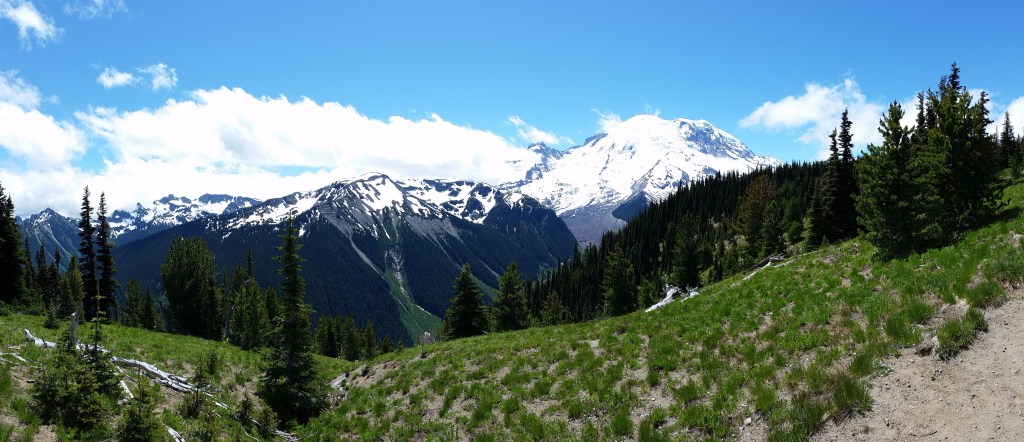
Top photo: Mount Rainier National Park, U.S.A., 2016.
 Faith working by love
Leave a comment