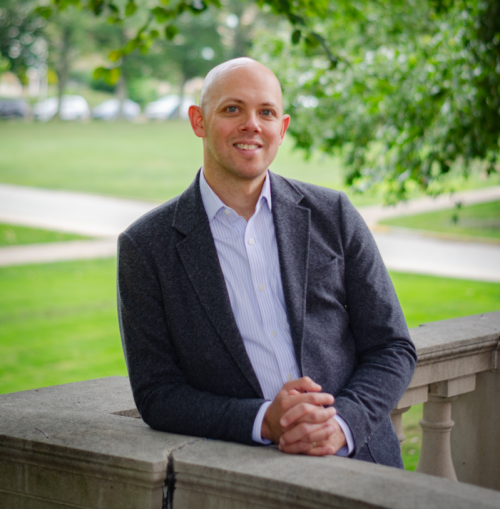
I am a student, teacher, pastor, writer, and advocate. And I am a United Methodist.
I am a United Methodist.
I grew up in small, medium, and large congregations in Pennsylvania and Tennessee, graduated from a UMC college and UMC seminary, and am an ordained elder in the UMC. I celebrate that we are a denomination with a presence in big cities, rural outposts, and everywhere in between. I value the spirit of epistemological humility present in “Big Tent Methodism,” where we are united by creedal Christianity with room for disagreement on particular matters. Though the UMC is still on its way toward perfection, with troubles and conflicts past, fightings without, and fears within, we are yet alive.
I am a student.
…of Jesus first, the Wesleys (John, Charles, and Susannah) second, and historical and contemporary religious scholarship third. Together these influences operate within a four-fold method of moral and ethical inquiry, commonly known in our tradition as the “Wesleyan Quadrilateral.” With the four points of Scripture, tradition, reason, and experience, the quadrilateral provides a framework for seeking out how Christ desires his followers to live faithfully.
Practically speaking, my educational background is as follows: B.A. in English/journalism from Ohio Northern University (2005); M.Div. from Candler School of Theology (2008); Th.M. in Moral Theology from Boston College School of Theology and Ministry (2023). I am considering continuation into a Ph.D. program within the next 2 years.
I am a teacher.
Formally, I have taught congregations about Scripture, Christian discipleship, our Methodist heritage, and the practice of ministry. I have taught English composition, research methods, and moral philosophy to college students. I have served as an instructor of preaching for UM laypersons, as the provisional residency coordinator for the Western PA UMC Board of Ministry since 2016, and as a clergy mentor for several UM ordination candidates.
Informally, I often find myself teaching through individual and small group conversations outside of church, or in academic settings. I love helping others pursue learning at all ages and life stages.
I am a pastor.
As an Ordained Elder in the United Methodist Church and full member of the Western Pennsylvania Annual Conference, I served three congregations over 14 years. These three churches differed in setting, size, type of ministry, level of education, and level of economic stability in church and community. Currently I serve in extension ministry as a communications strategist at Pittsburgh Theological Seminary, and continue to be a pastor for coworkers, while guest preaching and attending worship in local congregations. I am often a “community pastor” when participating in community events in my small town, gathering with friends, or visiting my friend’s small craft brewery.
I am a writer.
I have always expressed myself best through writing. For me, researching and writing a sermon is the best part of being a preacher. I have written opinion pieces for newspapers; blog posts on ministry, leadership, or spirituality for Pittsburgh Seminary and for the WPAUMC’; and a book review for The Christian Century. In the last year I have presented academic papers, including one on church-college relations and another on the public theology of Mister Rogers’ Neighborhood.
In my Th.M. studies at Boston College, I wrote research papers about virtue ethics, the racial wealth gap, sexual ethics, and The Social Principles of the United Methodist Church. My 65-page research thesis was “Is This How Human Life Should End? A Methodist Examination of Physician-Assisted Suicide.”
I am an advocate.
One of the saints in my cloud of witnesses is Mister Rogers, who graduated with a master of divinity from Pittsburgh Theological Seminary in 1962. Rogers credits his favorite seminary professor, Dr. William Orr, for teaching him that Scripture has both an accuser and an advocate. The accuser, the evil one, “would like nothing better than to have us feel awful about who we are . . . and look through those eyes at our neighbor, and see only what’s awful—in fact, look for what’s awful in our neighbor,” said Rogers. But Jesus, the advocate, he said, “would want us to feel as good as possible about God’s creation within us, and in [our minds] we would look through those eyes, and see what’s wonderful about our neighbor.”
In everything I write, especially here, I seek to view the world through the eyes of Jesus, the advocate. As God’s beloved, there is good in each of us, and thus there is something wonderful in each of our neighbors as well. God’s grace is abundant enough to provide for human flourishing for all, with respect to age, ability, race, ethnicity, nationality, gender identity, sexual identity or preference, theological conclusions, or religious belief (or absence thereof). There’s room enough for all of us in God’s Creation, and the advocate commands us to seek to live in peace with one another. I try by best to live out this command.
Rev. Erik Hoeke
Ordained Elder, Western Pennsylvania Conference of The United Methodist Church
 Faith working by love